Cecilia Payne: The Astronomer Who Gave Us Stars
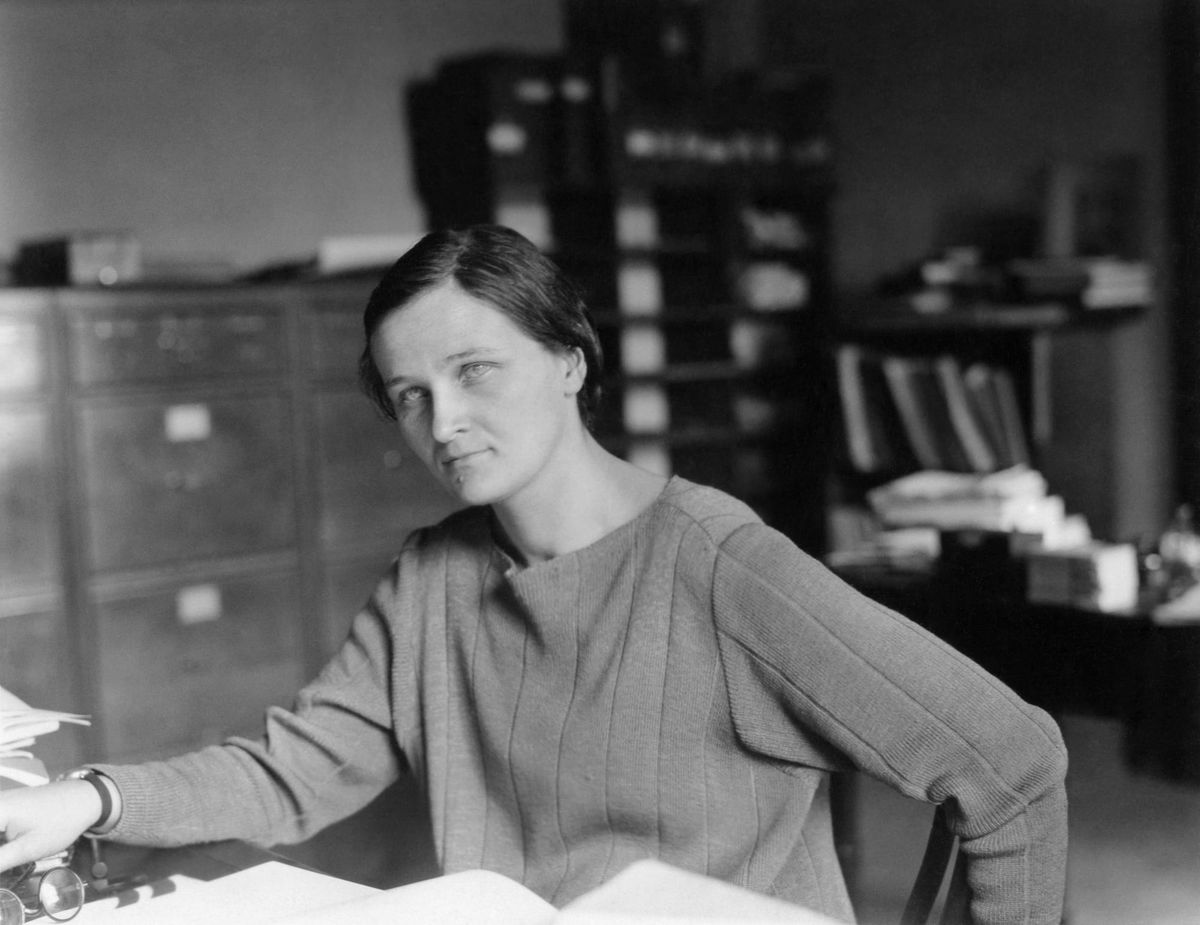
Every night, we look up at the stars. For most of human history, no one knew what they were made of.
In 1925, a twenty-five-year-old student looked at the light from the stars and reached a conclusion so extraordinary that even she was persuaded not to believe it.
Born in England in 1900, Cecilia Payne won a scholarship to the University of Cambridge, where she excelled in physics and astronomy. But Cambridge refused to award degrees to women. Undeterred, she crossed the Atlantic and joined Harvard College Observatory in the United States.
There, Payne began studying the spectra of stars, the tiny fingerprints of light that reveal the elements they contain. Most astronomers believed that the Sun and the stars were made of much the same materials as the Earth.
What the evidence was telling her seemed impossible.
She submitted her doctoral thesis, arguing that hydrogen and helium were the most abundant elements in stars. The conclusion seemed so extraordinary that the distinguished astronomer Henry Norris Russell persuaded her to describe it as probably incorrect.
A few years later, Russell’s own work confirmed that Payne had been right all along.
Astronomer Otto Struve later called her dissertation ‘the most brilliant PhD thesis ever written in astronomy’.
Yet recognition came slowly. Newspapers that marked her death scarcely mentioned her greatest discovery. There is no famous law, equation or monument bearing her name. Most of us learn that hydrogen is the most abundant element in the universe without ever learning how we came to know it.
Payne’s work changed more than astronomy. It changed our understanding of our place in the cosmos. The stars were no longer distant lights in the sky but vast furnaces made largely of the same simplest element found throughout the universe.
Her discovery became the foundation of modern astrophysics. It allowed scientists to understand how stars shine, how they live and die, and where the elements that make up planets, and ourselves, come from.
Before Cecilia Payne, we could see the stars. After Cecilia Payne, we began to understand them.
Further reading
What Stars Are Made of: The Life of Cecilia Payne-Gaposchkin by Donovan Moore