Jo van Gogh-Bonger: The 28-Year-Old Who Made Vincent van Gogh
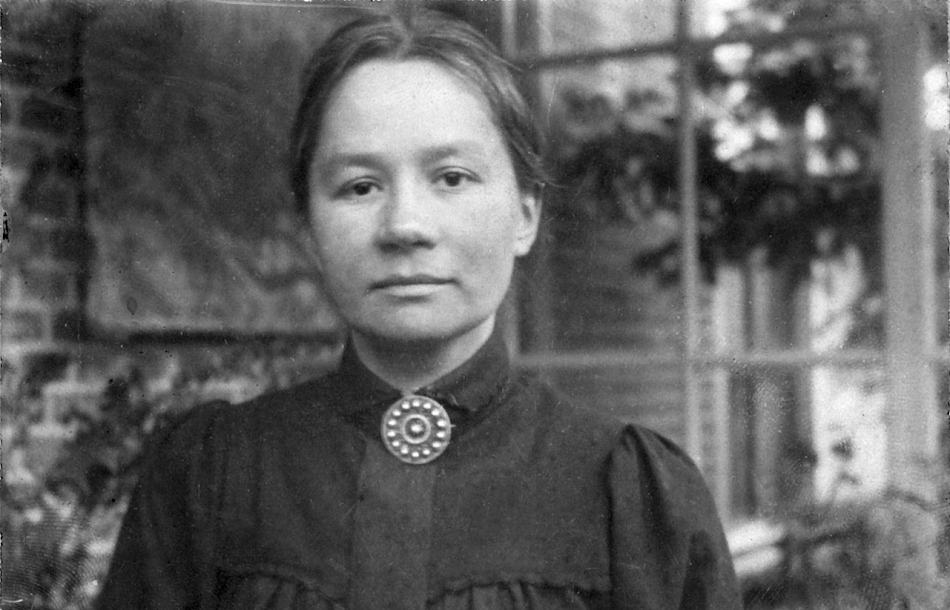
Today Vincent van Gogh is the most famous artist in the world. When he died in July 1890, he was essentially unknown.
His younger brother Theo, a Paris art dealer, had supported Vincent financially. He owned much of Vincent’s work and hoped to establish his brother’s reputation.
Six months later, Theo was dead too.
His widow, Jo van Gogh-Bonger, was 28. She and Theo had been married for less than two years and had an infant son.
In 1891, she returned to the Netherlands with a large collection of Vincent’s paintings and drawings. There, she opened a boarding house in Bussum, near Amsterdam.
After Vincent’s death, Theo tried to arrange a memorial exhibition with the Paris dealer Durand-Ruel. He was turned down. Instead, around 100 paintings were hung throughout the “sombre little rooms” of Theo’s apartment, where they attracted little attention.
Jo carried on Theo’s work, but took a different approach.
Gradually she began getting the paintings out into the world. She lent paintings to exhibitions and sold others selectively. Then in 1892, more than 100 of Vincent’s works were shown at the Kunstzaal Panorama in Amsterdam. Only four works sold.
She still faced resistance, even from people who were helping her. While organising the Amsterdam exhibition, the artist Richard Roland Holst dismissed Jo’s enthusiasm as “schoolgirlish twaddle.”
In Germany, Jo partnered with the influential Berlin dealer Paul Cassirer.
By 1905, Cassirer had sold 20 van Gogh paintings and Jo had organised Vincent’s largest exhibition to date: 472 works at Amsterdam’s Stedelijk Museum. It was his first major exhibition in a public museum. Six years later, a buyer offered an “exceedingly high” price for the entire collection.
She said no.
Jo was doing more than selling Vincent’s paintings. She was building his reputation. And the paintings were not her only asset.
Vincent had written hundreds of letters to Theo. In them he described what he was painting, reading and thinking, his ideas about colour, nature and art, and his disappointments, loneliness and determination to keep working.
Jo waited until 1914, when Vincent was gaining recognition as a painter, before publishing his letters to Theo in three volumes. Her 1914 foreword confirms that the delay was deliberate. She believed Vincent’s work needed to be recognised before public interest focused on the man.
Artists and critics could read what Vincent was striving for. Dealers, collectors and museums could see a serious and articulate artist. Readers could grasp his struggles, isolation and the determination that kept him painting.
In 1915, Jo moved to New York. Over the next four years, she worked on an English translation of the letters and promoted Vincent’s work in America.
Jo van Gogh-Bonger spent more than 30 years encouraging people to look at Vincent’s paintings, exhibit them, buy them, write about them and understand the man behind them. Today, his work hangs in the world’s greatest museums and has inspired generations of artists and viewers.
Before the world discovered Vincent van Gogh, it first needed Jo van Gogh-Bonger.
Further reading
Jo van Gogh-Bonger: The Woman Who Made Vincent Famous by Hans Luijten (translated by Lynne Richards)