Peter Safar: The Doctor Who Began Before the Beginning
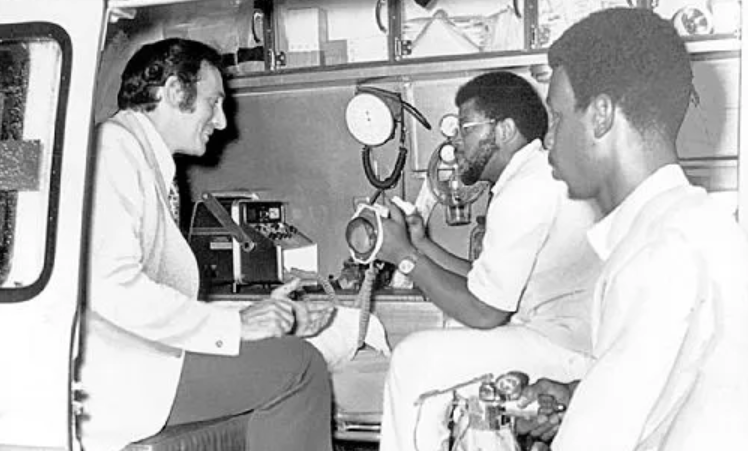
A man suffers a heart attack over Sunday lunch and collapses. An ambulance arrives. The crew assesses him, monitors his heart, starts treatment and alerts the hospital. By the time he reaches the emergency department, he is already a patient.
But in the 1960s, ambulances in much of the world were little more than transport. In the United States, ambulances were run by hospitals, police and fire departments, private companies and even funeral homes. Their job was to get you to hospital.
Peter Safar believed that was already too late.
Safar was an anaesthesiologist, a doctor trained to keep patients alive when they could no longer breathe for themselves. He helped develop modern CPR, which can triple a person’s chances of surviving cardiac arrest. He showed that mouth-to-mouth resuscitation could keep someone alive after they stopped breathing, then helped combine it with chest compressions into a technique ordinary people could learn.
In 1966, Safar’s 12-year-old daughter, Elizabeth, died after a severe asthma attack. She received no medical care on the way to hospital. Her death strengthened Safar’s resolve to bring medical treatment beyond the hospital walls.
In Pittsburgh’s Hill District, a black-run community organisation called Freedom House Enterprises was creating jobs for unemployed residents. A plan emerged to use its trucks and drivers to run an ambulance service.
Safar saw an opportunity to make it something more. He offered his expertise on ambulance design and proposed training recruits to treat patients before they reached hospital.
In 1967, he helped establish the Freedom House Ambulance Service in Pittsburgh. Its recruits were black men from one of the city’s poorest neighbourhoods. Many had struggled to find work. Nearly half had not finished high school.
Safar designed their training programme. Over 32 weeks, they received 300 hours of classroom instruction in anatomy, physiology, resuscitation and emergency care. They also trained in hospitals before spending nine months learning on the streets. He also redesigned the ambulances. Rather than vehicles built only to transport patients to hospital, he wanted mobile intensive-care units equipped to treat them on the way.
They were called ambulance attendants. They were doing the work of modern paramedics.
They faced resistance. Some doctors argued that medical treatment belonged in hospitals and should be delivered only by physicians. Police and fire departments opposed changes that threatened their traditional control of emergency transport. Freedom House crews also encountered racial prejudice from some of the people they were trying to help.
One comparison found inappropriate treatment in 62 per cent of cases handled by Pittsburgh’s police ambulances, compared with only 11 per cent of those handled by Freedom House crews. Eventually, even police officers routinely requested Freedom House for the most serious calls.
The idea spread. Across America and beyond, ambulance crews were trained and equipped to care for patients before they reached hospital.
Today, when an ambulance arrives at a car crash, a heart attack or difficult birth, we don’t expect a taxi to hospital. We expect highly trained first responders to assess us, make decisions and begin saving our lives.
Peter Safar helped change the beginning.
Further reading
American Sirens: The Incredible Story of the Black Men Who Became America’s First Paramedics by Kevin Hazzard