Ellen Swallow Richards: The ‘Housekeeper’ Who Brought Science Home
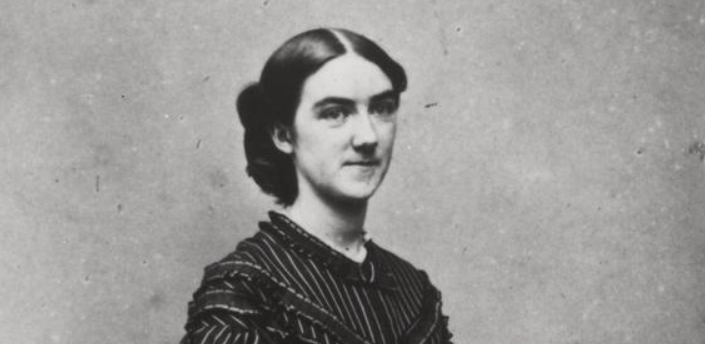
How can you tell whether a glass of water is safe to drink?
In the nineteenth century, there was no reliable way to tell a clean river from a contaminated one. You could not judge by looking alone.
In the American state of Massachusetts, the problem was getting worse. Industrial cities, including Lowell and Lawrence, were growing along the Merrimack River. Factories discharged untreated effluent into it. Sewers carried human waste into it. The same river was used for drinking water.
Typhoid fever, which spread through contaminated water, was killing people across the state.
In 1886, the state legislature ordered an investigation of Massachusetts’ rivers and water supplies.
It turned to Ellen Swallow Richards.
Fourteen years earlier, Richards had been admitted to the Massachusetts Institute of Technology (MIT) “in the nature of an experiment” and had become its first female graduate.
She remained at MIT, teaching chemistry and specialising in the analysis of water, air and food. In 1876, she founded a laboratory where women could study science. Nearly 500 women passed through it before MIT opened its laboratories to women and men alike.
By 1887, Richards was one of the country’s leading water experts.
Richards led a two-year survey that analysed more than 20,000 samples from rivers, reservoirs and wells. She established the normal levels of chlorides in water across Massachusetts. Unusually high levels could reveal contamination by sewage. The method became a model for water surveys around the world.
Lawrence began filtering its drinking water in 1893. Its typhoid death rate fell by more than three quarters.
But Richards was already applying the same thinking elsewhere.
The home.
Factories were being transformed by science. Homes still had poor ventilation, bad drainage and little understanding of nutrition.
In 1879, Richards asked:
“Why do not our housekeepers keep pace with our machine shops?”
She turned her own home into a laboratory.
Richards altered its plumbing to protect the well from wastewater. She replaced lead pipes, improved ventilation, installed extraction over the cooker and positioned the gas meter where she could measure the fuel used by different methods of cooking.
She tested food to find out what it really contained and explored the relationship between diet and nutrition. In 1890, she helped establish the New England Kitchen in Boston, where affordable meals were prepared according to their nutritional value.
The Kitchen struggled to change the diets of the immigrant workers it was designed to help, so Richards brought the idea into Boston’s schools. Within a year, it was feeding 5,000 children a day.
She wrote popular how-to books explaining the chemistry of cooking, cleaning, food and sanitation. She also developed science courses that women could study from home.
Richards had taken science into the home. Next she built a profession around it.
From 1899, she chaired a series of conferences at Lake Placid in New York. Scientists and educators developed domestic science as a field of study, with courses, teaching methods and standards.
Schools and universities adopted them.
Today, homes are radically healthier: drinking water is routinely tested, buildings are designed for ventilation, food is analysed for safety and nutrition and school meals are planned around children’s nutritional needs.
Ellen Swallow Richards drove this new approach and created an army of domestic scientists to continue her work.
Further reading
The Life of Ellen H. Richards by Caroline L. Hunt