John Frederic Bateman: The Victorian Who Moved Mountains
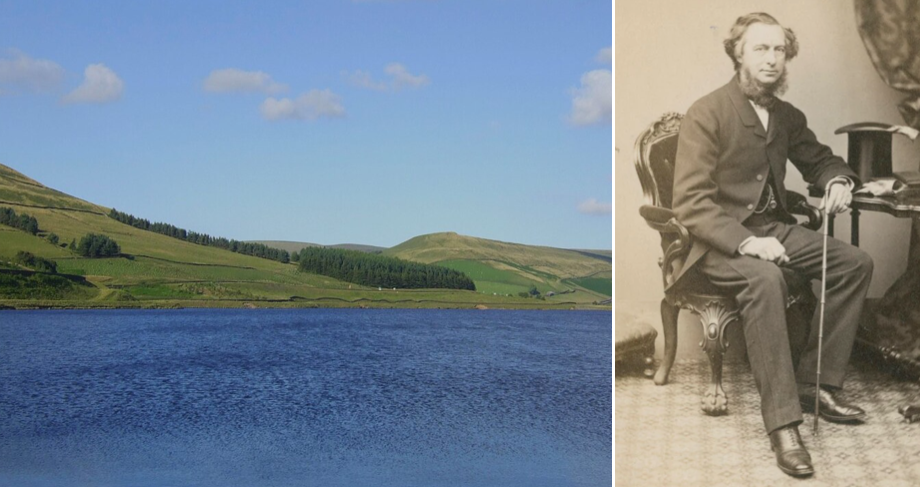
In 1846, almost half the homes in Manchester, northern England, had no water supply. The world’s first great industrial city was running short of water.
12,000 homes, a quarter of the city’s households, relied on shared street taps that ran for only a few hours a day.
Meanwhile, Manchester kept growing.
Its wells and streams were increasingly polluted. In 1848, cholera returned. The city needed more water than its surroundings could provide.
The city authorities turned to John Frederic La Trobe Bateman. Still in his thirties, he had spent years tackling the water problems of Britain’s growing towns.
He calculated that Manchester and Salford already needed eight million gallons a day. Within twenty years, he predicted, they would need twice that.
His solution was to leave Manchester.
Bateman looked east, to Longdendale in the rain-soaked Pennine hills of northern England.
There, he planned what would become the largest chain of reservoirs in the world, capturing the rain that fell on the hills and sending it back to Manchester.
Reservoirs were nothing new. Using them to feed a great industrial city on this scale was.
It worked. Water flowed into Manchester day and night. The new supply fed homes and factories and gave the city clean water on a scale it had never known. It helped bring cholera under control and made better sanitation possible.
Manchester grew. Bateman kept building reservoirs.
Glasgow, in Scotland, came calling. Bateman brought water more than thirty miles from Loch Katrine through tunnels, aqueducts and pipes. Gravity did the rest.
The system opened in 1859. Glasgow still drinks from it today.
Bateman was part of a generation of engineers changing the city. His expertise was sought internationally, from Dublin and Belfast to Naples, Constantinople, Colombo and Buenos Aires.
Today, China’s South-to-North Water Diversion Project carries water from the Danjiangkou Reservoir more than 1,000 kilometres north. It supplies 45 major cities and 185 million people.
Water allows growth. Growth requires water. John Frederic Bateman’s reservoirs gave us both.
Suggested by Paul Oughton
Further reading
History and Description of the Manchester Waterworks by John Frederic La Trobe Bateman