Jean-François Champollion: The Linguist Who Gave Ancient Egypt Its Voice
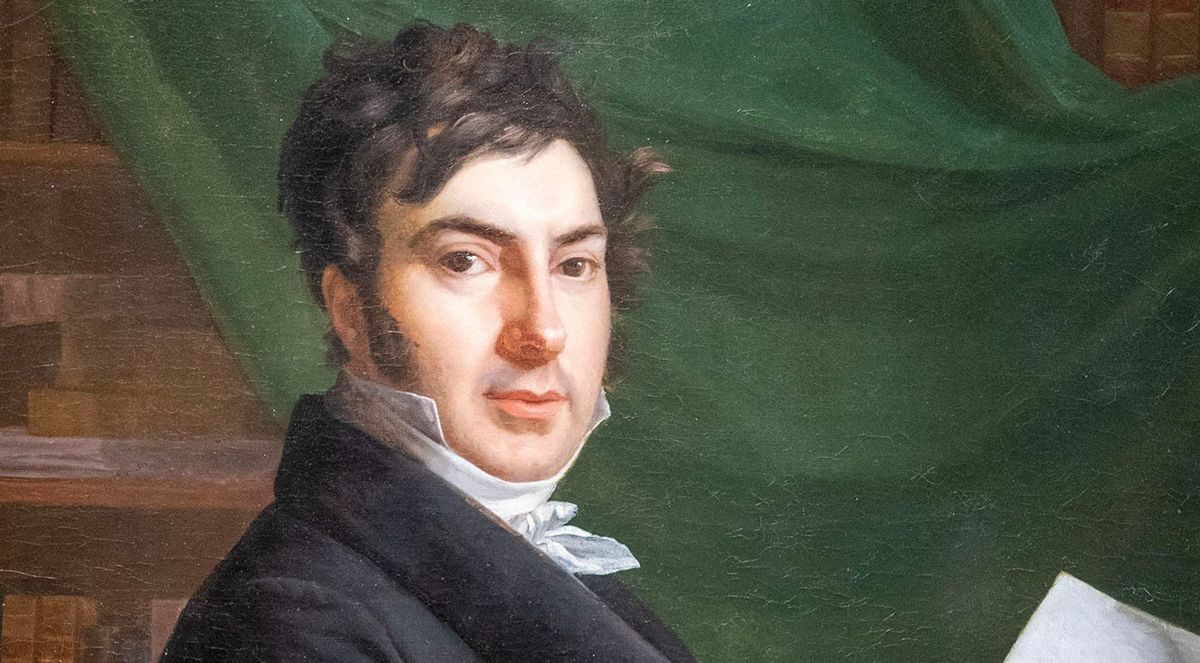
Ancient Egypt is one of history’s greatest civilisations.
It built pyramids, raised colossal temples and endured for more than three thousand years. It also left behind an extraordinary written record. Kings recorded their victories. Officials kept accounts. Priests wrote prayers. Families commissioned inscriptions for their loved ones.
Then the language was lost.
By the Middle Ages, no one could read Egyptian hieroglyphs. The monuments remained, but the people who had built them had fallen silent.
A young French scholar, Jean-François Champollion, refused to accept this. Champollion had an extraordinary gift for languages. As a young man, he mastered Greek, Latin, Hebrew and Arabic, as well as Coptic, the last surviving form of the ancient Egyptian language.
His opportunity came in 1799, when he was just nine years old. During Napoleon’s campaign in Egypt, French soldiers uncovered the Rosetta Stone. It carried a single decree, issued in 196 BC on behalf of King Ptolemy V, inscribed in three scripts: Greek, Demotic and Egyptian hieroglyphs. Since Greek could still be read, scholars believed it could help decipher the other two.
After Napoleon’s defeat, the stone was taken to Britain. Visitors to the British Museum could study the original, but Champollion had to work from France using copies, casts and ink impressions of its inscriptions.
But the stone alone was not enough.
For more than twenty years, Europe’s leading scholars studied the inscriptions without fully deciphering them. One was the English polymath Thomas Young, among the most brilliant minds of his age. Young correctly identified the phonetic value of several hieroglyphs and made crucial breakthroughs, but the complete system still eluded him.
The challenge was not simply translating the words, but understanding how hieroglyphs worked. Were they pictures? Symbols? Or representations of the sounds of spoken language?
Champollion built on Young’s discoveries but took them in a radically different direction. Drawing on his knowledge of Coptic, he shifted his attention from what the symbols meant to how they functioned.
After years of testing one possibility after another, he realised that hieroglyphs combined signs for sounds with signs for ideas.
In September 1822, it all fell into place. For the first time in more than a thousand years, ancient Egyptian writing began to reveal its secrets. According to family accounts, Champollion rushed into his brother’s office, declared, “I’ve got it!”, then collapsed from exhaustion.
Rather than relying on Greek and Roman writers to explain ancient Egypt, historians could finally read what the Egyptians themselves had written. The names of forgotten pharaohs emerged from temple walls. Royal decrees, religious texts, personal letters and records of everyday life became accessible once again.
Today, every serious study of ancient Egypt rests on the foundations Champollion laid. Jean-François Champollion gave one of history’s greatest civilisations its voice back.
Further reading
The Writing of the Gods: The Race to Decode the Rosetta Stone by Edward Dolnick