Norman Borlaug: The Man Who Made Wheat Smaller and Bellies Fuller
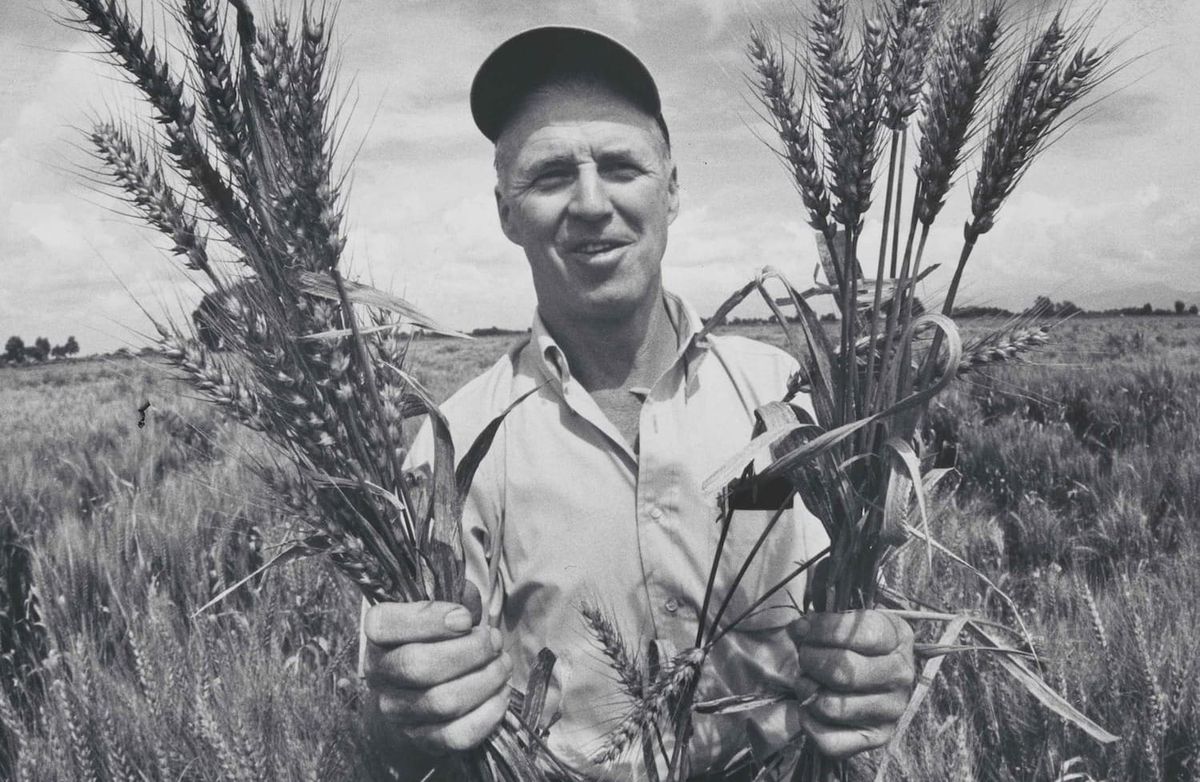
In the 1940s, wheat had a problem. The more fertiliser farmers applied, the more the plants grew. That sounded like progress. It wasn’t. The taller the wheat became, the more likely it was to collapse under its own weight. Heavy heads of grain bent the stems to the ground. Harvests were lost. The extra fertiliser produced more straw, not more food.
Most people accepted this as an unavoidable fact of farming. Norman Borlaug didn’t.
After years of breeding and experimentation, Borlaug developed disease-resistant dwarf wheat varieties. They looked unimpressive, but they solved a problem that had frustrated farmers for generations. When given fertiliser, they did not topple over. Instead of putting their energy into growing taller stems, they produced more grain.
The results astonished farmers. Harvests climbed dramatically. Mexico, once dependent on imported wheat, became self-sufficient.
Then came an even greater challenge. In the 1960s, rapid population growth and poor harvests led experts to predict disaster in India and Pakistan. Governments feared widespread famine.
Borlaug persuaded officials to import his new wheat varieties. There were political obstacles, logistical difficulties and scientific sceptics. But the seeds arrived. Farmers planted them. Harvests exceeded expectations. Within a few years, wheat production in both countries had surged.
Millions of people never knew his name. They simply found that food remained available.
Borlaug preferred fields to conferences and experiments to ideology. When critics later argued that modern agriculture created new environmental problems, he acknowledged some of their concerns. But he never lost sight of the immediate reality of hunger. A child who starves today, he believed, gains little comfort from promises about a better world tomorrow.
In 1970, Borlaug received the Nobel Peace Prize.
Today, Borlaug is often credited with helping save more than a billion lives. What is beyond doubt is that millions who never heard of Norman Borlaug lived because more food was produced than anyone had thought possible. Despite receiving the Nobel Peace Prize, Borlaug never achieved the wider recognition afforded to many whose contributions were far smaller.
Further reading
The Man Who Fed the World: Nobel Peace Prize Laureate Norman Borlaug and His Battle to End World Hunger by Leon Hesser