William Perkin: The Chemist Who Painted the Modern World
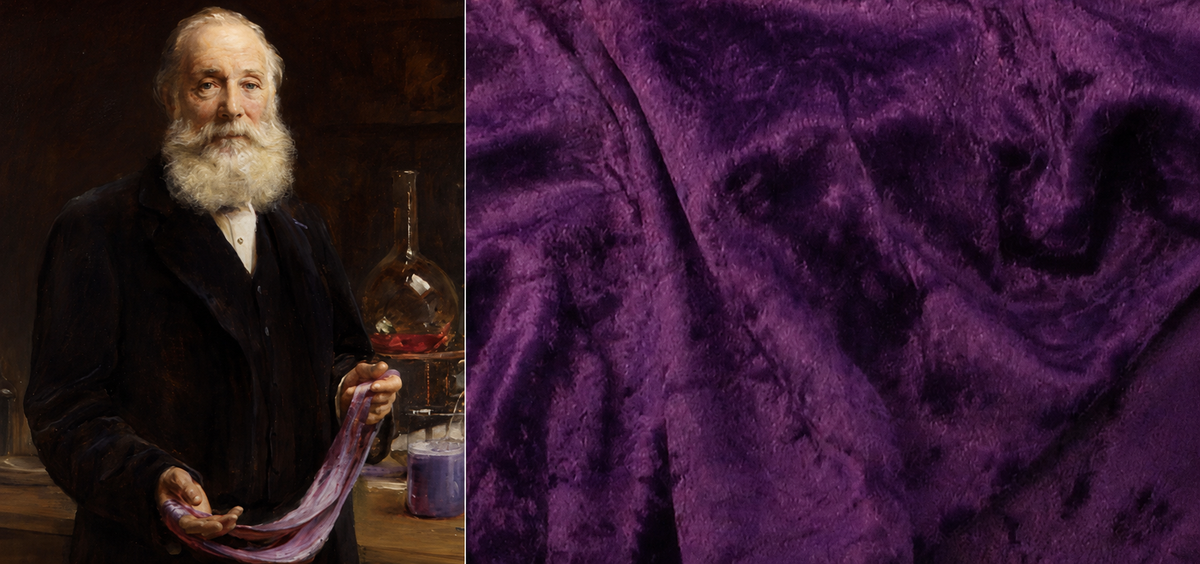
For most of human history, colour was expensive.
The richest purples came from thousands of sea snails. Brilliant reds required insects gathered by hand. Deep blues depended on rare plants grown in specific climates. Vivid, long-lasting colours were so costly that they became symbols of wealth, power and status.
Then, in 1856, an eighteen-year-old student accidentally changed everything.
William Henry Perkin was trying to solve a completely different problem. His professor had challenged him to find a way of producing quinine, a valuable medicine used to treat malaria. Working in a makeshift laboratory at his home in London, Perkin experimented with chemicals derived from coal tar, a waste product of the gas industry.
The experiment failed.
Instead of quinine, he was left with a dark, sticky residue that appeared useless. But when he cleaned the mixture with alcohol, he noticed something remarkable: it produced an intense purple colour unlike anything he had seen before.
Many people would have thrown the mess away. Perkin looked closer.
Realising the colour could be used as a dye, he patented the discovery and persuaded his family to help him build a factory. The new dye, later known as mauveine or simply mauve, was cheaper, brighter and easier to produce than traditional purple dyes. It quickly became a sensation. Fashion embraced it, royalty wore it, and a global craze for mauve swept across Europe and beyond.
Perkin had demonstrated that entirely new materials could be created through chemistry. His discovery launched the synthetic dye industry and helped lay the foundations for the modern chemical industry. The techniques developed by dye chemists would later lead to new medicines, plastics, photographic materials and countless other products that transformed everyday life.
Today, most of the colours in our clothes, inks, paints and manufactured products trace their origins back to Perkin’s accidental discovery. A failed attempt to cure disease ended up colouring the modern world.
Further reading
Mauve: How One Man Invented a Color That Changed the World by Simon Garfield