Edmond Albius: The Boy Who Made Vanilla Possible
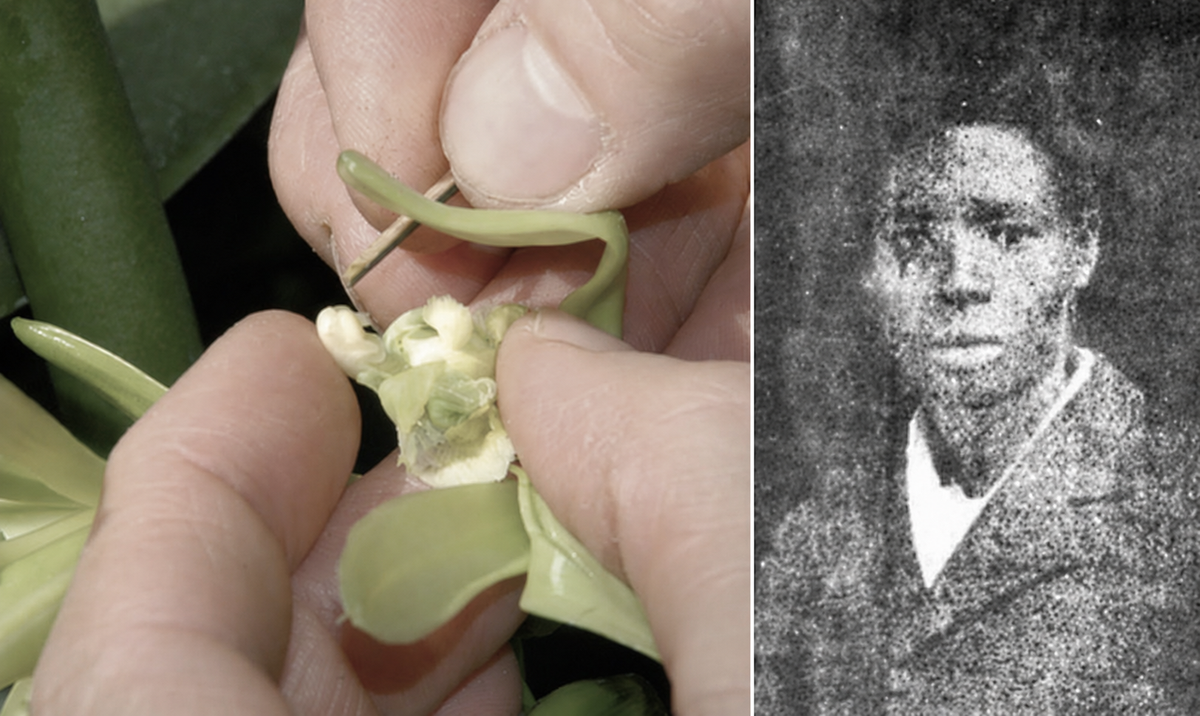
Today, vanilla is everywhere.
It flavours ice cream, cakes, biscuits, perfumes and countless other products. It is one of the world’s most popular flavours, so familiar that most of us barely give it a second thought.
Yet much of the modern vanilla industry exists because of a discovery made by a twelve-year-old slave boy on a small island in the Indian Ocean. His name was Edmond Albius.
In the early nineteenth century, French settlers brought vanilla orchids from Mexico to Réunion Island. The plants grew well enough, but there was a problem. The orchids would not produce vanilla pods.
For years, nobody knew why.
The reason was eventually discovered: in Mexico, vanilla orchids were pollinated by native bees that did not exist on Réunion. Without pollination, there could be no harvest.
Botanists searched for a solution. Some methods worked, but they were slow, impractical and expensive. Vanilla remained a crop with huge potential but no reliable way to produce it at scale. Then, in 1841, Edmond Albius found a better answer.
Despite having no formal education and being unable to read or write, the young boy observed the flower closely and realised that its natural barrier could be lifted by hand. Using a simple stick or blade of grass and a gentle press of his thumb, he could transfer pollen from the male part of the flower to the female part in seconds. The method was astonishingly simple. More importantly, it was fast.
For the first time, vanilla orchids could be pollinated efficiently enough to make large-scale cultivation commercially viable. The technique spread rapidly across Réunion and then throughout other vanilla-growing regions. Vanilla production soared. At one point, Réunion became the world’s leading supplier of vanilla.
Nearly two centuries later, the world’s largest vanilla producer, Madagascar, still relies on essentially the same hand-pollination method.
Edmond Albius died in poverty and remains little known outside agricultural history. Yet every vanilla pod harvested by hand today carries something of his legacy.
Further reading
Vanilla: Travels in Search of the Ice Cream Orchid by Tim Ecott