Jack Johnson: The Boxer Who Refused to Know His Place
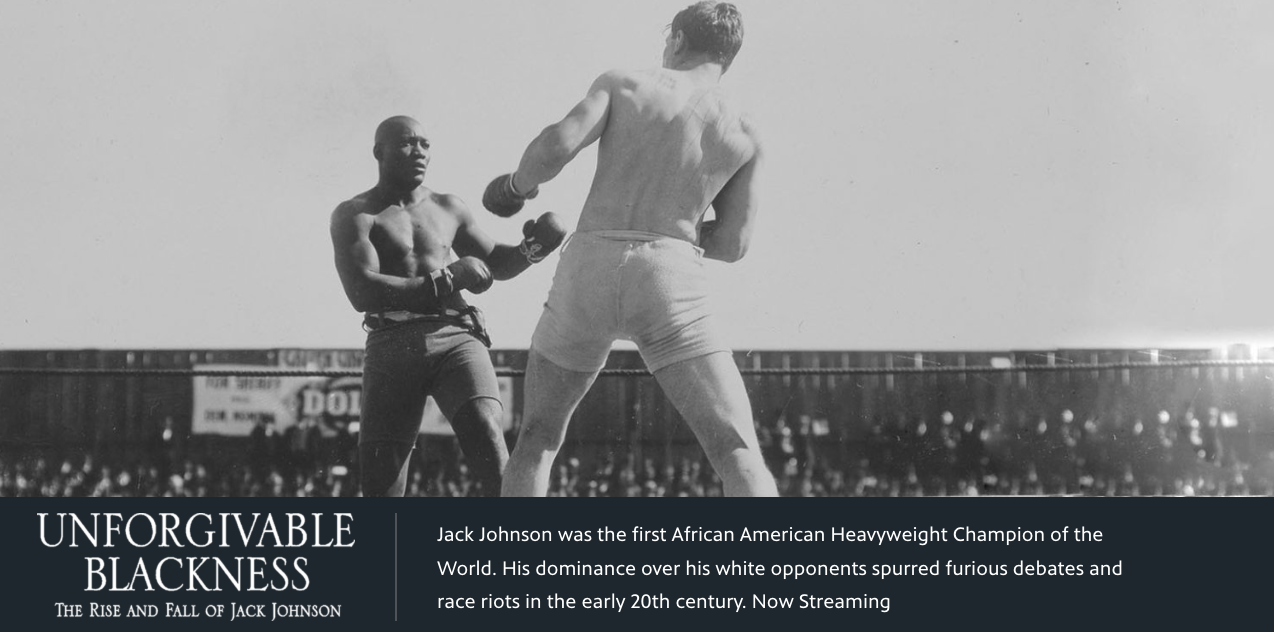
At the start of the twentieth century, the heavyweight boxing championship was more than just a sporting title. Many saw it as proof of white racial superiority.
No black boxer had ever held the title. Some gifted fighters were denied the chance to compete for it, while others who did get an opportunity fell short, reinforcing racist stereotypes.
Then came Jack Johnson.
Born in Galveston, Texas, in 1878, Johnson grew up during the Jim Crow era, when segregation shaped almost every aspect of American life. His parents, both former slaves, were determined that their children should receive an education. Johnson left school young but never stopped learning, reading widely throughout his life.
He rarely rushed. He slipped punches. Leaned away. Smiled. Then struck back. Opponents swung hard and found only air. By the time they landed a clean punch, Johnson had landed three, dismantling them with speed, precision and extraordinary defensive skill.
Yet the heavyweight title remained beyond him. Boxing’s establishment simply refused to give him a title shot.
Johnson spent years travelling America, fighting anyone prepared to face him. He defeated all-comers, but boxing's gatekeepers continued to block his path to the title.
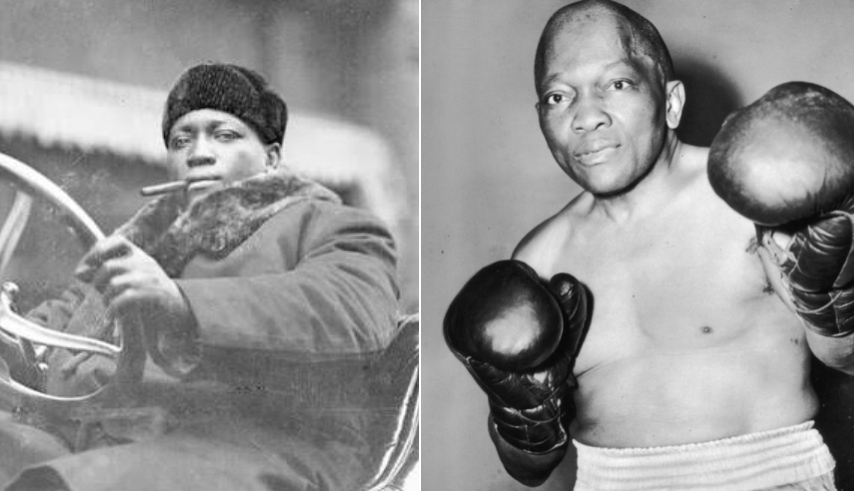
Outside the ring, Johnson travelled with a portable gramophone and a collection of classical records. He negotiated his own purses and even patented an improved adjustable wrench. He dressed impeccably, drove fast cars and refused to downplay his success. In Chicago, he opened the Café de Champion, where black and white customers mixed freely, defying the conventions that shaped much of American life.
The more Johnson won, the more confidently he lived, and the harder he became to ignore.
For years, world heavyweight champion Tommy Burns refused to fight him. Eventually, Burns named his price: $30,000, an astronomical purse that few believed anyone would pay. Then Australian promoter Hugh ‘Huge Deal’ McIntosh called his bluff.
The fight took place in Sydney on 26 December 1908. Burns received his $30,000. Johnson, despite being the challenger everyone wanted to see, earned just $5,000.
Seconds after the opening bell, Johnson floored Burns with a right uppercut. Moments later, he knocked him down again. Smiling and taunting his opponent, Johnson picked him apart. In the fourteenth round, police entered the ring and stopped the contest. Jack Johnson became the first black heavyweight champion of the world.
Newspapers and promoters began searching for a ‘Great White Hope’ who could reclaim the title.
Former champion James J. Jeffries came out of retirement to answer that call, declaring, “I am going into this fight for the sole purpose of proving that a white man is better than a Negro”.
Their contest, fought before nearly 20,000 spectators in Reno, Nevada, on 4 July 1910, became known as the ‘Fight of the Century’.
Johnson controlled the bout from the start. In the fifteenth round, he knocked Jeffries down three times, the first knockdowns of Jeffries’ career. Before the referee could count him out, Jeffries’ corner threw in the towel.
The reaction was immediate. Across the country, some celebrated Johnson’s victory. Others responded with violence. At least 20 people were killed and hundreds injured in the riots that followed.
Johnson’s success made him a national celebrity. As his profile grew, so did efforts to bring him down.
In 1913, he was convicted under the Mann Act after travelling across state lines with a white woman. Johnson escaped abroad but eventually returned to serve a one-year prison sentence.
In 2018, more than seventy years after his death, he received a posthumous presidential pardon from Donald Trump. By then, countless black heavyweight champions had followed where Jack Johnson had led.
Suggested by Mick Hume
Further reading
Unforgivable Blackness: The Rise and Fall of Jack Johnson by Geoffrey Ward
Ken Burns documentary
International viewers:
US viewers only: