Tommy Flowers: The Engineer Who Built the Impossible Machine
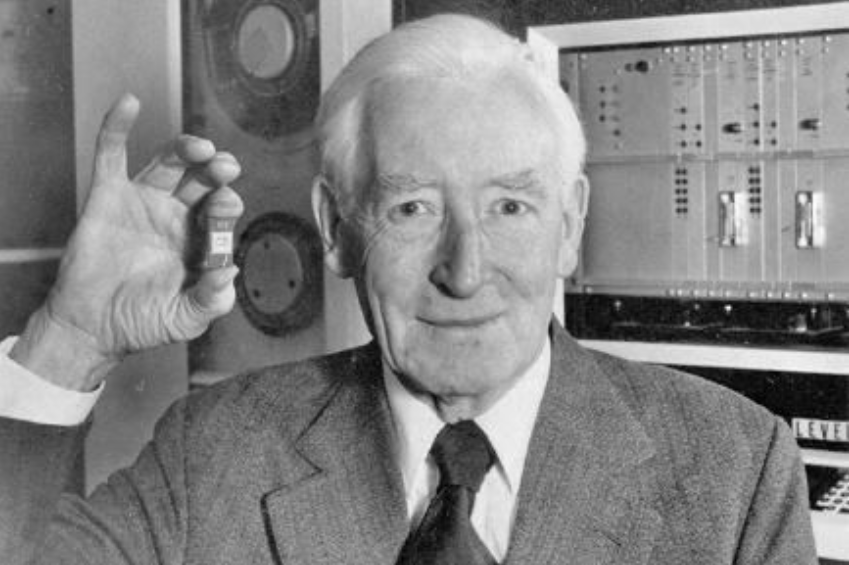
During the Second World War, Britain intercepted German messages but could not act on them.
At the secret wartime codebreaking centre, Bletchley Park, mathematicians had worked out how to break the German codes. The problem was speed. The calculations were too vast to complete by hand. The existing machines were too slow. By the time the messages could be read, the information they contained was of little use.
A faster machine was needed.
The machine, known as Heath Robinson, depended on two punched paper tapes running together at high speed. Keeping them synchronised was difficult.
Tommy Flowers had a different idea.
Flowers was an engineer at the General Post Office’s research station at Dollis Hill in north London, where he specialised in electronic telephone exchanges. Instead of trying to synchronise two paper tapes, he proposed replacing one with electronics.
The largest electronic machines then in use contained around 150 thermionic valves. Flowers’ design would use more than 1,500.
Bletchley Park believed that a machine with so many valves could never be reliable. Flowers knew otherwise. Valves usually failed when they were repeatedly switched on and off. Kept running continuously under stable conditions, thousands could work together.
Bletchley Park remained unconvinced. Flowers pressed on, putting his own money into the project.
Working with a team at Dollis Hill, Flowers designed and built the machine in eleven months. It filled a room with racks of valves, switches and wires. A continuous loop of punched paper tape raced through it at thousands of characters per second.
The machine was called Colossus.
By February 1944, messages that had taken weeks to decipher could be broken in hours.Flowers immediately began work on a faster version. The first Colossus Mark II entered service on 1 June 1944, five days before the Allied invasion of Normandy. Its decrypts helped Allied commanders understand German military plans before D-Day.
By the end of the war, ten Colossus machines had been built.
After the war, eight of the ten machines were destroyed and Flowers was ordered to surrender all documentation.
Tommy Flowers could tell no one what he had achieved. He could make no living from his expertise. Colossus remained classified until the 1970s. Flowers died in 1998.
Suggested by Neil Sedley
Further reading
Colossus: The Secrets of Bletchley Park’s Codebreaking Computers edited by B. Jack Copeland