Major Jack Mullin: The Man Who Turned a Nazi Secret into Modern Music
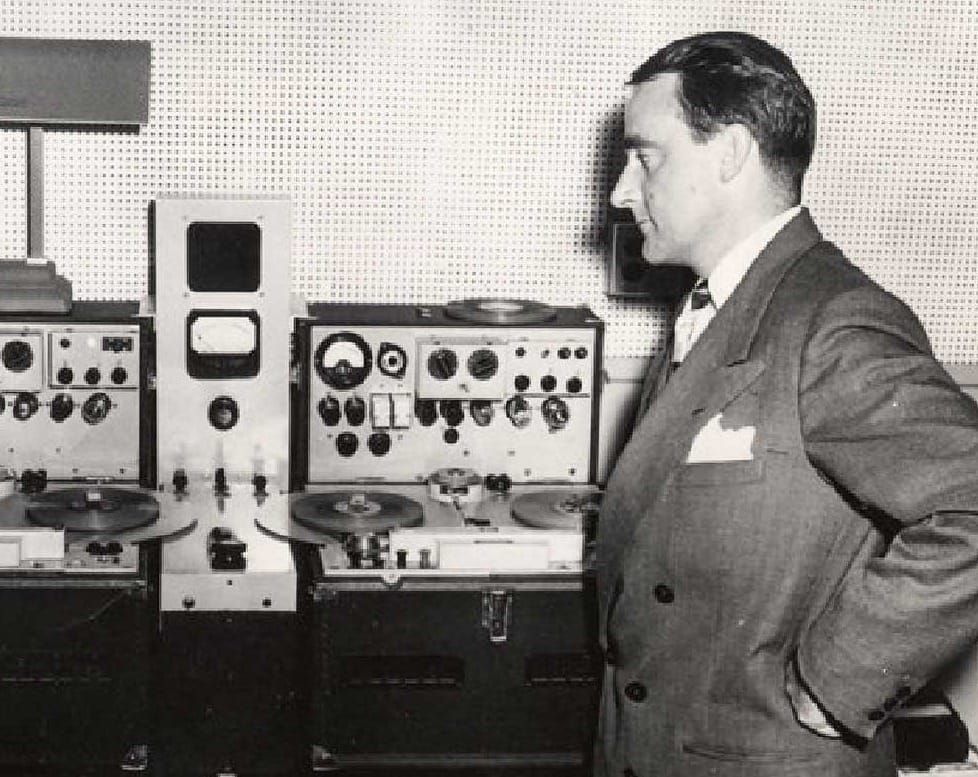
Before the late 1940s, there was no way to edit recorded music. If a performer made a mistake, everyone started again.
All that changed when an American Army officer made an extraordinary discovery in the ruins of Nazi Germany. His name was Major Jack Mullin.
An engineer in the U.S. Army Signal Corps, Mullin had been sent to investigate German radio technology. Among the equipment he discovered were two unfamiliar tape-recording machines. The Germans had quietly developed magnetic tape recording into something far beyond anything available to the Allies. Their broadcasts were so convincing that Allied intelligence often believed they were listening to live speeches or concerts, when in fact they had been recorded hours earlier.
Recognising that he had found something remarkable, Mullin shipped the two machines, along with reels of magnetic tape, back to the United States.
After leaving the army, he painstakingly modified the recorders and began demonstrating them to engineers, broadcasters and musicians. Audiences were astonished. The recordings sounded so clear that many assumed hidden performers must still be playing somewhere out of sight.
One member of the audience immediately understood the possibilities.
Bing Crosby was one of the biggest entertainers in America. His weekly radio show attracted around 50 million listeners, but there was a problem. Because of the different time zones across the United States, he had to perform the same hour-long programme live twice, once for the East Coast and again, three hours later, for the West Coast.
Crosby had grown tired of repeating himself. Existing recording methods produced poor-quality sound, making pre-recorded broadcasts unacceptable. Mullin’s machines changed everything. Crosby invested in the young electronics company Ampex, helping it develop commercial versions of the technology and bringing magnetic tape recording into American broadcasting.
The consequences reached far beyond radio. Tape could be stopped, rewound and replayed. Mistakes could be cut out with a razor blade and joined together almost invisibly. But for the first time, recorded sound could also be shaped rather than simply captured.
One of the first Ampex machines, built from Mullin’s designs, reached guitarist and inventor Les Paul. He realised the technology could do far more than correct mistakes. By developing multitrack recording, he allowed musicians to record separate parts independently before combining them into a finished performance. Songs no longer had to be performed perfectly in a single take. They could be built, refined and reimagined.
The recording studio had become more than a place to capture music. It had become a place to create it.
The same technology that allowed mistakes to be removed eventually made it possible to layer sounds, build songs from fragments and, decades later, give birth to modern music sampling.
The modern recording studio became an instrument in its own right. Albums were no longer limited to reproducing a live performance. They became works of construction, imagination and experimentation. The same magnetic tape technology later made professional video recording practical, laying the foundations for television production, archive footage and the instant replays that millions of sports fans now take for granted.
Jack Mullin did not invent magnetic tape recording. But he recognised its potential when few people outside Germany had even seen it. By carrying two remarkable machines home from a defeated enemy and showing the world what they could do, he helped transform recording from a way of preserving performances into a medium for creativity.
Before Mullin, recording was about preserving a moment. After Mullin, it became possible to invent one.
Further reading
Perfecting Sound Forever: An Aural History of Recorded Music by Greg Milner