Nils Bohlin: The Man Whose Restraint Saved Lives
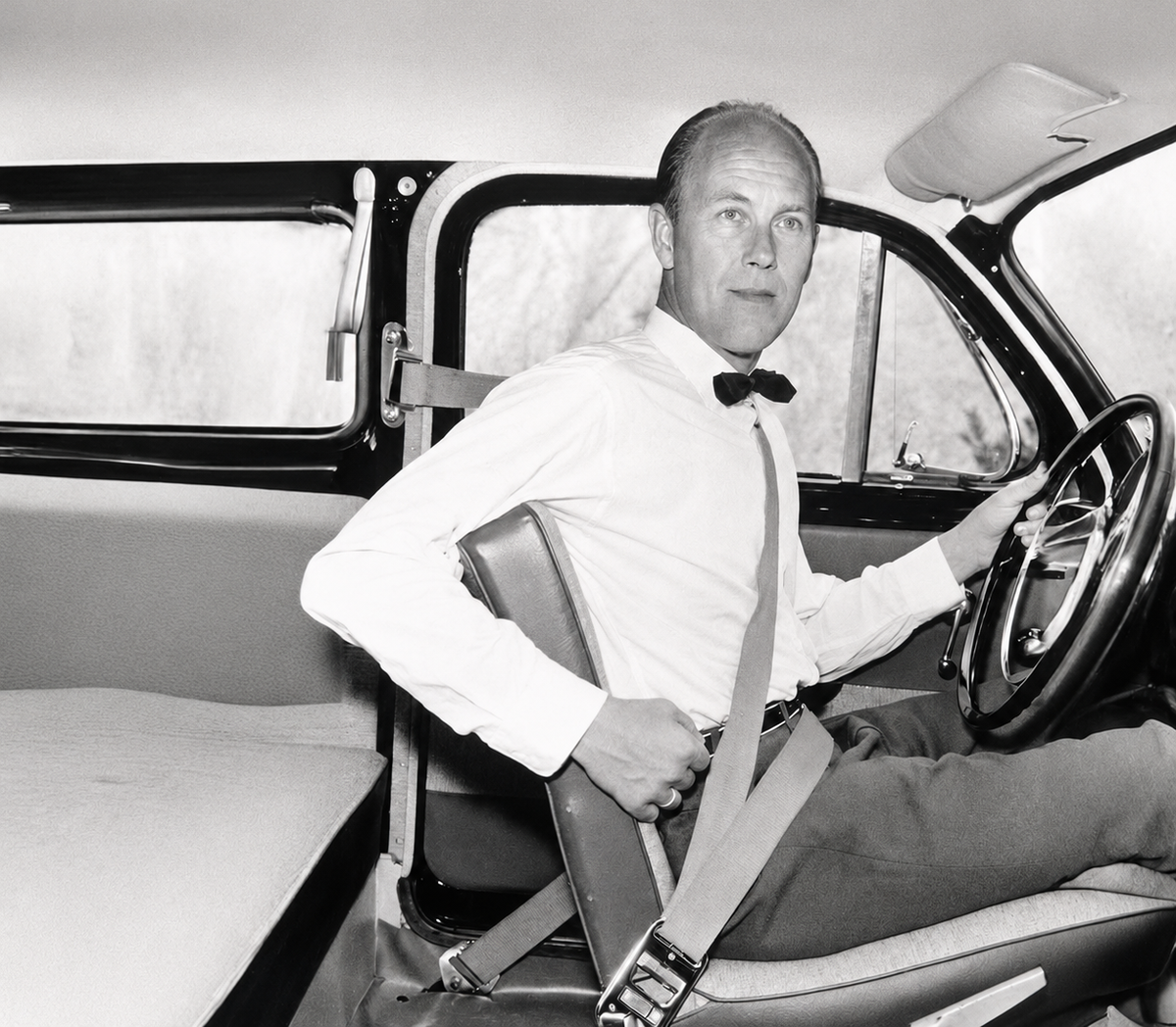
By the late 1950s, road deaths were climbing across the developed world. In the United States alone, almost 700 people were being killed every week. Cars had become faster, but car safety had failed to keep pace.
The seat belts that did exist were little more than straps across the waist. More elaborate harnesses existed for racing drivers and military pilots, but they were awkward, restrictive and impractical for everyday motorists. A better solution was desperately needed.
In 1959, a Swedish engineer named Nils Bohlin provided it. Bohlin had previously worked designing ejection seats for military aircraft, where understanding how the human body behaves under extreme forces could mean the difference between life and death. When he joined Volvo, he applied the same thinking to cars.
His breakthrough was deceptively simple.
Instead of restraining only the waist, Bohlin designed a single belt that crossed both the chest and hips before fastening beside the seat. This spread crash forces across the body’s strongest bones, the pelvis, ribcage and shoulder, while preventing occupants from being thrown forwards. Just as importantly, it could be fastened with one hand in a matter of seconds, making people far more likely to use it.
Volvo patented the design. Then it made an extraordinary decision.
Rather than enforcing its patent exclusively, Volvo made the design available for every car manufacturer to use without charge. The commercial value could have been enormous, but Volvo concluded that saving lives mattered more than protecting market share.
The decision transformed road safety around the world. Today the three-point seat belt is fitted to virtually every passenger car and is widely regarded as the single most effective safety device ever introduced into motor vehicles. Researchers estimate that it has saved well over a million lives and prevented tens of millions of serious injuries.
Nils Bohlin invented a seat belt that people would actually use, and Volvo’s decision to share it made it one of the greatest life-saving inventions of the modern age.
Further reading
Traffic Safety and Human Behavior by David Shinar