Sir Kenlem Digby: The Englishman Who Made Champagne Possible
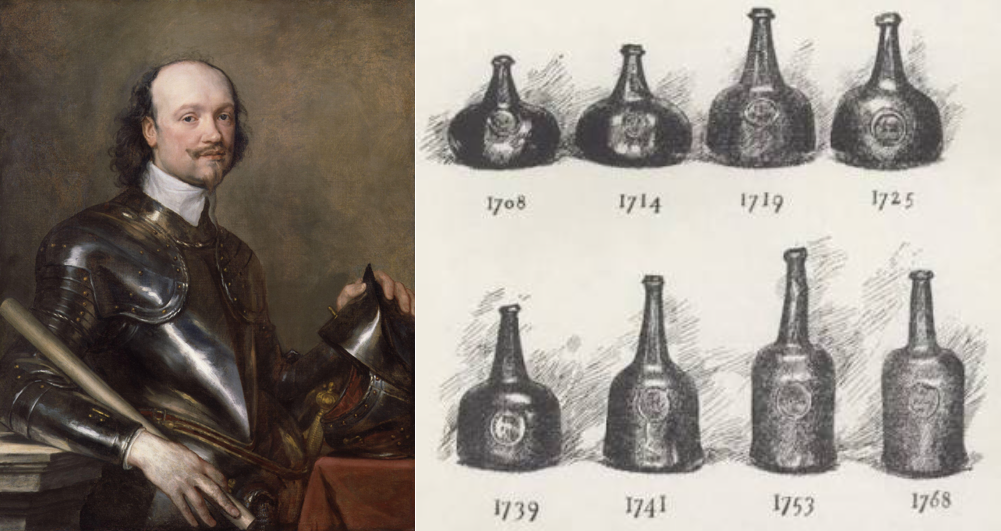
Champagne may be one of France’s greatest gifts to the world, but it might never have taken the form we know today without an Englishman: Sir Kenelm Digby.
Digby didn’t invent champagne. He invented the bottle that made it possible.
Before the seventeenth century, wine bottles were fragile and unreliable. Most wine was stored in barrels and, once exposed to air, had to be drunk quickly before spoiling. Wines that travelled best were those that benefited from oxidation, such as sherry and Madeira. Sparkling wine posed an even greater challenge. The pressure that created its bubbles frequently shattered the weak glass containers of the day.
In the 1630s, Digby developed a stronger bottle. Produced in coal-fired furnaces, it was thicker, tougher and better able to withstand pressure than earlier designs. Wine could now be securely sealed, stored for longer and transported farther. Sparkling wines could survive. More importantly, fine wines could age.
Champagne became commercially viable. Port could be cellared for decades. Bordeaux could mature and improve rather than merely endure a journey. Digby’s bottle helped transform fine wine into a global industry worth hundreds of billions.
Digby was a soldier, privateer, philosopher, alchemist and courtier. His father was executed for his part in the Gunpowder Plot, the failed attempt to blow up the English Parliament in 1605. Digby claimed to have been propositioned by the widowed Queen of France and was accused of murdering his wife, before being cleared. He also promoted the Powder of Sympathy, a supposed cure that claimed to heal wounds by treating the weapon that caused them rather than the patient. In his portrait by Van Dyck, now in London’s National Portrait Gallery, he looks exactly as one might hope: charming, intelligent and faintly disreputable.
Few people realise that every bottle of champagne, every vintage port and every carefully aged Bordeaux owes something to Sir Kenelm Digby's invention. The next time you raise a glass, spare a thought for the Englishman who made it possible.
Further reading
Empire of Booze: British History Through the Bottom of a Glass by Henry Jeffreys